Fire rated doors Dubai: ratings, certificates and handover
A fire rated door is a tested assembly, not a heavy leaf with a sticker on it. In Dubai the rating holds only if the leaf, frame, seals, closer and ironmongery match the tested set and the label survives installation. This is written for the people who sign the handover: facility managers, fit-out contractors and business owners taking a commercial unit.
What a fire rating actually means
Two letters carry the standard. E means integrity, so the door holds back flame and hot gas for the stated time. EI adds insulation, so the face away from the fire stays under a temperature limit. Most commercial doors here are E only. Plant rooms and some shared walls need EI.
FD30 is thirty minutes, FD60 sixty, FD90 ninety, FD120 two hours. Under EN 13501 the same ratings appear as E30, E60, EI60 and so on. Older drawings still cite BS 476 part 22, the standard that came before EN 13501. A BS 476 door is not automatically interchangeable with an EN 13501 door of the same minutes, and an inspector notices when the approved drawing asked for one and the site got the other.
The label matters more than the specification sheet. Each certified leaf carries a permanent plug or plate with the manufacturer, the rating, the test standard and a certificate number. If that label is missing, painted over or lost in site handling, the door is unrated as far as handover is concerned.
Where a Dubai project is forced into them
Civil Defence runs the approval. The door schedule goes in with the drawings, ratings are checked room by room against use and occupancy, and the site inspection confirms the installed doors match what was approved. Swap a door on site without a variation and the risk sits with you.
Landlords and mall operators add a second layer. Many master communities and shopping centres publish their own door and ironmongery standards, name approved suppliers and want certificates before releasing a unit. Insurers ask similar questions, because a commercial policy can be affected by unrated doors in a compartment line.
The fit-out handover pack is the third. The consultant or main contractor wants the schedule, the certificates, the as-builts and the maintenance file together. A door that works but has no paperwork still fails.
The door is a system, not a slab
A correctly rated leaf loses its rating in predictable ways.
Seals cut short or painted over
Intumescent seals expand under heat and close the leaf to frame gap. They run continuously, uninterrupted at the hinge and lock edges, in the size and type the test used. Cutting around a hinge or leaving a break at a top corner is one of the most common failures on site.
The wrong closer
The closer is part of the tested set. Too light and the door will not latch against seal pressure. Too heavy and it slams and distorts the frame. Either way it can fail the simple test an inspector performs, which is releasing the door partly open and watching it close and latch on its own.
Extra screws and extra hardware
Every fixing into the leaf is a hole in the tested construction. A second sign plate, a coat hook, a chain or a viewer all change the door. Fixings through the seal line are worse.
Oversized undercuts
A twenty millimetre gap under a door is not ventilation, it is a hole. If the design needs air transfer, use a tested louvre or a fire damper, not a saw cut.
Glazing swapped late
Vision panels must use the tested glass, bead and intumescent glazing tape. Changing to a cheaper glass because the specified one is on a long lead time removes the rating quietly.
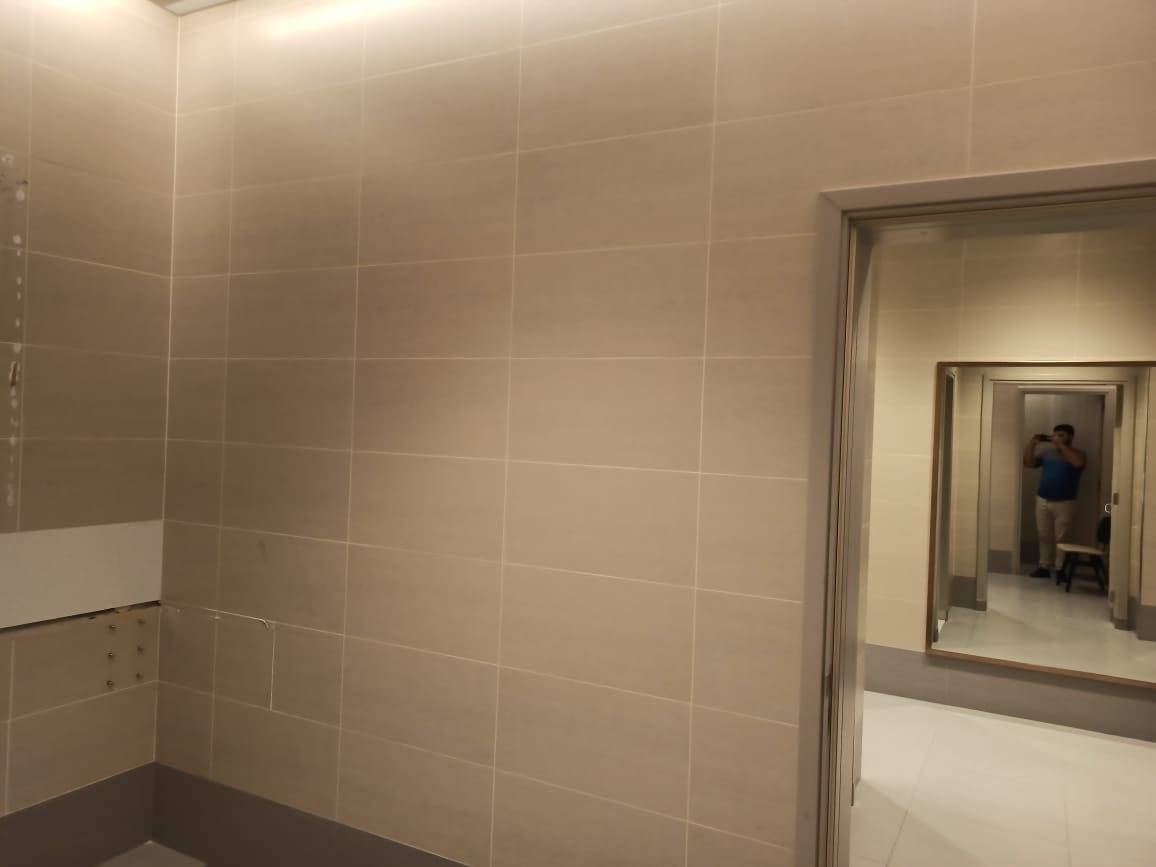 fire rated doors Dubai clients need certified" loading="lazy" decoding="async" /> Progress shot of a changing area mid fit-out, tiled and mirrored.
Timber, steel or glazed
Timber fire doors do most of the work in commercial fit-out. They suit offices, clinics, hotel back-of-house and retail units, and because they are a joinery product the face can be veneered or painted to match the rest of the interior without touching the tested core. That is the practical advantage front of house: a corridor that looks like the joinery package, not like a plant room.
Steel earns its place where abuse is constant. Service corridors, waste rooms, loading areas, pump and electrical rooms. It takes a closer and a kick plate better and survives being propped.
Glazed doors go where sightlines matter: clinic corridors, reception, hotel service routes. The glazed assembly has to be tested as a glazed assembly, which is a different product from a timber door with a certified vision panel, and it is priced and installed differently.
Handover documentation
The fire door schedule is the spine. One line per door: reference, location, rating, leaf and frame construction, ironmongery set, seal type, glazing, and the certificate that matches that door. Inspectors work from the schedule against the floor plan.
Certificates come next, one per door type rather than one per project. Labels are photographed before hanging and again after finishing. As-builts show the doors on the compartment lines. The O&M file carries closer settings, the seal specification and a maintenance register so the operator can inspect and record. If you want the wider background on how these packages are put together, there are more fit-out and joinery guides.
 fire rated doors Dubai fit-outs" loading="lazy" decoding="async" /> 3D render, a design concept for a bedroom with integrated joinery. Not a photograph of completed work.
Remediation: reseal or replace
Not every failed door needs replacing. Missing or damaged seals, a closer that will not latch, an undercut a threshold plate can close, a label the manufacturer can reissue, all of those are fixable and re-inspectable.
Replacement is usually right when the leaf is wrong: a hollow core door in a compartment wall, a leaf rated below the drawing, a door trimmed on site beyond the permitted amount, or glazing that cannot be traced to a test. Extra hardware is a judgement call, since some fixings can be made good with tested plugs and some leaves have lost too much core.
What a fair quotation should include
A fire door quote is a scope document, not a number. It starts with a site survey and a door schedule, because nobody can price a door they have not measured in the opening it will hang in.
The leaf construction and finish should be named: core, facing, veneer or paint, edge details. Certification and labelling should sit on their own line so you can see what you are buying. Installation, including adjusting the frame, setting the closer and making good to the wall, should be a line. The handover pack, certificates and as-builts should be a line.
Cost moves with the rating, the leaf size, the frame type and whether the existing opening takes a standard set. It moves with ironmongery, since a latch and a standard closer is one thing and a magnetic hold-open linked to the alarm is another. It moves with finish, because a matched veneer door front of house costs more than a painted one back of house. Access, out-of-hours working and the number of doors move it too.
Shukran Interiors & Building Contracting runs fire doors inside a joinery and fit-out package, so the workshop that produces mosque joinery and hotel millwork also builds the leaves. Finish matching is not a separate negotiation. You can see our commercial fit-out and joinery projects in Dubai to judge the standard.
Shukran Interiors delivered exceptional quality on our project from start to finish. Their team is highly professional, attentive to detail, and completed everything right on schedule. Naeem, 5/5
The Google rating sits at 4.8 from 30 reviews.
To price your job, send the door schedule if one exists. If not, send photographs of each opening with a tape across the frame, the wall type, the floor level and a door reference, plus the building location and your handover date. WhatsApp is the fastest route on +971 55 131 7286, or send us your fire door schedule for a site review.
Frequently asked questions
What is the difference between FD30 and FD60 fire doors?
FD30 holds back fire for thirty minutes and FD60 for sixty. The higher rating usually means a denser core, a heavier leaf and a stronger closer, so the door costs more and the frame and hinges have to suit it. The rating a room needs comes from the approved drawing and the use of the space, not from preference.
Does the certificate cover the leaf or the whole door assembly?
It covers the tested assembly, which is why the frame, seals, closer, hinges, glazing and ironmongery all have to match the tested set. A certificate for a leaf alone tells you very little once the door is installed with different hardware. Keep the schedule tied to the certificate reference for each door.
Can an existing fire door be re-certified after new hardware is fitted?
Sometimes. If the additions can be made good with tested intumescent plugs and the leaf keeps its label and its edge integrity, the door can be re-inspected and accepted. If the leaf has been trimmed, bored through the seal line or fitted with glazing that cannot be traced to a test, replacement is the honest answer.
How often should fire doors be checked after handover?
The maintenance register in the handover pack should set the interval for the building. The check itself is simple: seals intact, closer latching, nothing propped against the leaf, no unauthorised hardware, label legible. What matters is that the check is recorded, because an inspector or insurer will ask for the record rather than the intention.