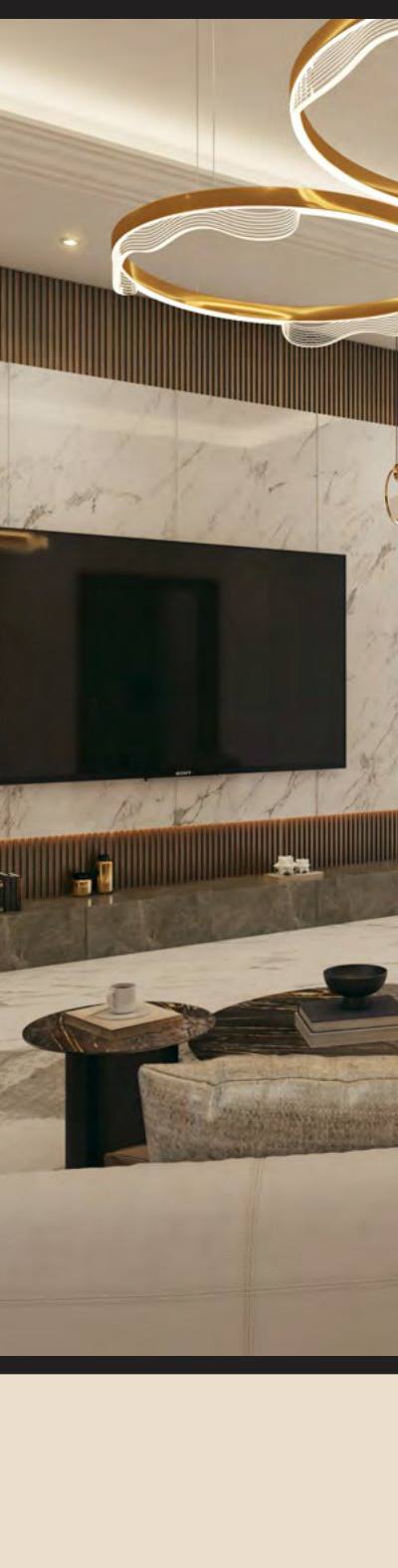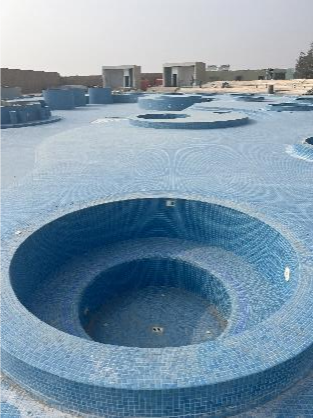
Joinery lead time in Dubai: where the weeks actually go
On a commercial joinery package the workshop is rarely the bottleneck. The calendar is set before the first board is cut, by drawing approval, material procurement and site readiness, with production sitting in the middle of that chain. Ask for one number and you will get an optimistic one. Ask for a programme with dates against each stage and you get something you can hold a contractor to.
Lead time is a chain, not a number
Every package passes the same five gates: shop drawing approval, procurement, production, finishing and installation. Those are five separate lead times, not one, and they only overlap where somebody planned for the overlap. Veneer gets ordered after the sample is approved. Door leaves get built after ironmongery is confirmed. Installation starts after the wet trades have cleared the floor.
This is why two contractors quote the same scope at six weeks and at fourteen. One is quoting the workshop. The other is quoting the whole chain, including the approvals they do not control. Get the second version in writing, and put those dates into the package document: what a joinery sub-contract package must state.
Where the weeks actually go, stage by stage
Drawing approval is usually the longest block, and it is the one clients underestimate most. Shop drawings go to the consultant, then into the landlord design review on many Dubai buildings, then to DCD for anything touching fire rating or means of escape, then back with comments. Each comment cycle costs a week or more, and the number of cycles depends on how complete the first submission was.
Mock-up sign-off sits inside that same window. Production should not be released until the consultant, and often the operator, has stood in front of the joint, the finish and the edge detail and accepted them. A mock-up that is almost right is the most expensive item on the job, because it gets approved verbally and then rejected at inspection.
Procurement is days for stock items and weeks for anything imported: veneer matched to an approved sample, solid timber, non-standard ironmongery, certified fire rated door sets. Fire rated assemblies are the classic trap. Leaf, frame, seals and closer have to be a tested combination, and the certificate has to name what is actually being fitted. Swap the closer for a cheaper one and the set is no longer the tested assembly.
Production and finishing are the part a contractor genuinely controls. Finishing takes longer than most clients allow, because coats need to cure between passes and summer humidity in the Gulf changes how a lacquer or a polish behaves. Installation is often the shortest stage and the one with the least room for error, especially on a live building.
What moves the number on a Dubai project
Imported veneer and solid timber. When the design calls for a species, figure or colour match that has to come from Europe or Asia, sample approval becomes a procurement date rather than a design detail. If the sample lands during the drawing review the job runs. If it lands after, the programme slips by the same amount of time.
Fire rated door assemblies with certification. Certification adds a review step at Civil Defence on most commercial buildings, and the paperwork has to match the installed set exactly. Glazed, acoustic rated or multi-leaf sets take more weeks than a plain flush door, and the difference is inspection rather than manufacturing.
Curved work and inlay. Book-matched panels, curved reception counters and inlaid timber take bench time that cannot be compressed by adding labour. Mosque work behaves the same way, because fixed joinery has to be set out against the building and then built to that set-out.
Finishing and curing. Spray work, drying time and site humidity. A lacquer pushed into a damp room comes back as a snag list.
Site readiness and access. This is where programmes die quietly. No ceiling grid means no joinery above the counter line. A service lift booked by another trade means panels sitting in the truck. Hotel and mall installs on live floors are usually night shift only, which roughly halves daily output.
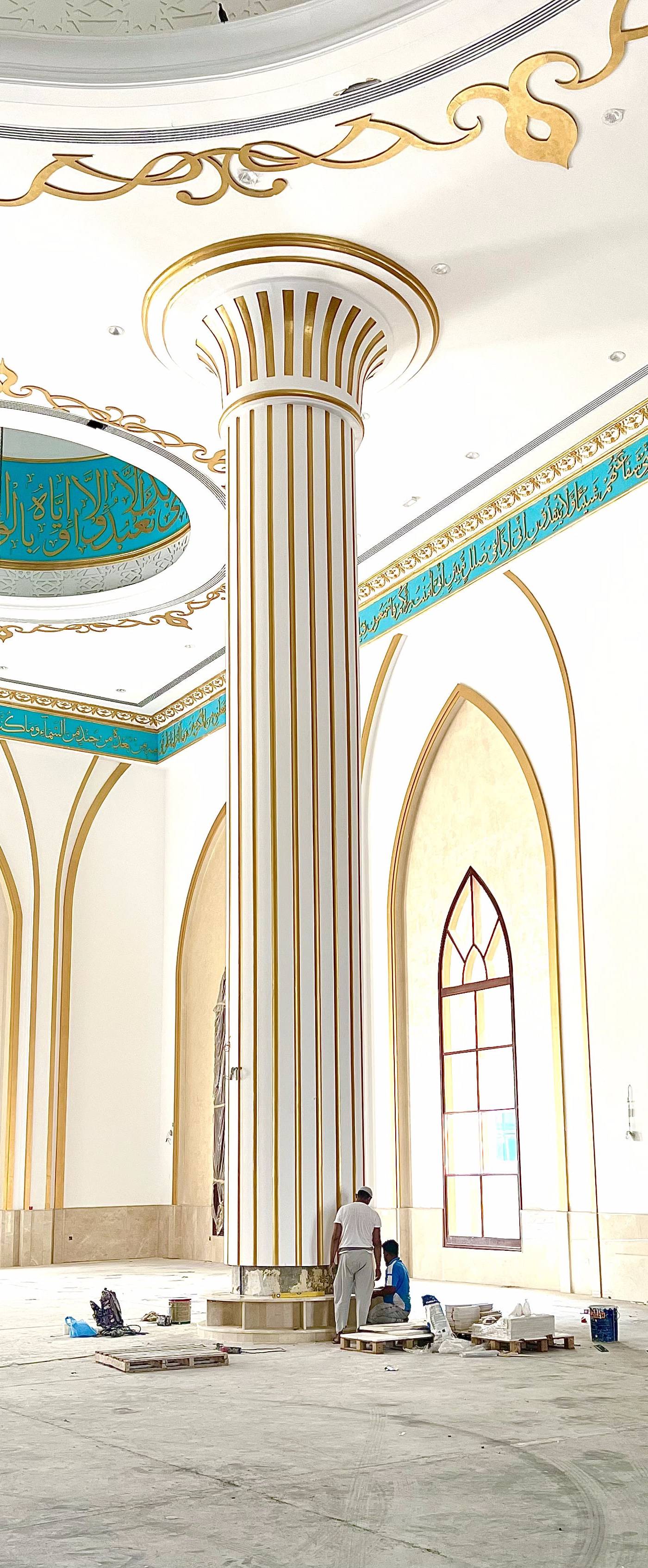
IMPZ Mosque. Joinery and fit-out on a building where every fixing line has to be set before production is released.
A realistic week-by-week sequence
For a hotel or office package of any real size, this is the shape we plan through our bespoke joinery and interior fit-out services. The ranges move with approval speed, not with how busy the workshop is.
- Weeks 1 to 3: site survey, shop drawings, finish and material samples submitted.
- Weeks 2 to 5: consultant and landlord design review, comment cycles, DCD submission where fire rating applies.
- Weeks 4 to 6: mock-up built and signed off. Production is not released before this.
- Weeks 4 to 8: procurement, with imported veneer and certified door sets at the long end.
- Weeks 6 to 11: production, phased so the first zone is ready for the first install zone.
- Weeks 10 to 13: finishing and curing, then protection and packing.
- Weeks 12 to 15: site installation, snagging and handover of the joinery package.
Compression comes from overlap, not from speed. Release the reception counter to production while the door schedule is still in review and you buy back three weeks. Wait for the entire drawing set to be approved before anything is cut and you will not. If you are procuring a hotel package, read what to lock in before you sign a hotel joinery package before the drawings go out, because most of these decisions are cheaper to make early.

IMPZ Mosque, closer in. On work like this the approved mock-up is what freezes the detail before the workshop starts.
Five things that blow a joinery programme
Late drawing approval. If comments land in week six of a ten week window, everything downstream moves by the same margin. The client usually holds this lever, because the consultant answers to the client.
Client-side material changes after procurement. Changing a veneer or a finish after the timber is ordered is not a design tweak, it is a restart on that item.
Unfinished wet works blocking install. Screeding, plastering and ceiling works that overrun push the joinery into a shorter window with the same scope.
An unapproved mock-up. The full set gets made, the consultant sees it at inspection, and the argument costs more than the mock-up did.
Single-shift installation to live floors. Hotels, malls and occupied offices usually give you nights only. Programme the install around that from day one.
How to hold a contractor to the programme
A programme that is not a contract document is a wish. It belongs in the sub-contract package with dates against each stage, and the drawing approval windows should be written as shared milestones, because the client owns the consultant relationship and the contractor does not.
Three things keep it honest after that. Release production in phases so the first zone is being built while later zones are still in approval. Ask for weekly production reporting with photographs from the shop floor, not a phone call saying it is on track. Agree the mock-up date in writing before anyone orders material.
Reviews of joinery contractors tend to talk about finish. The ones we value most talk about schedule:
Shukran Interiors delivered exceptional quality on our project from start to finish. Their team is highly professional, attentive to detail, and completed everything right on schedule. naeem hazrat, 5/5
We hold a Google rating of 4.8 from 31 reviews, and the pattern across them is delivery as much as detail.
To get a programme review on your own package, send the scope schedule or shop drawings, the elevations, the door schedule, your finish references, the site address and floor, and the handover date you are working back from. Photos of the space help more than a description where access and lift bookings are tight. WhatsApp is the fastest route on +971 55 131 7286, or send us your joinery package for a programme review and we will come back with dates stage by stage instead of a single number.
Frequently asked questions
How long does bespoke joinery take in Dubai?
It depends which part of the chain you measure. On a commercial job, approval and procurement often take as long as production, so a bespoke package should be planned in weeks from drawing submission rather than from order. Ask any contractor for stage dates, not one total.
Can production start before shop drawings are fully approved?
Normally no on a commercial project. Consultants inspect against approved drawings, so anything built ahead of approval carries remake risk. The safe way to gain time is phased release, where one zone is approved and released to the workshop while the next is still in review.
How long does joinery shop drawing approval take in Dubai?
Each review cycle commonly runs one to two weeks, and a commercial job usually needs two or three cycles across consultant, landlord design review and DCD where fire rating applies. The count of cycles depends on how complete and coordinated the first submission is.
Does a fire rated door assembly add to the lead time?
Yes, because the tested combination and its certificate are reviewed as well as the door itself. Changing ironmongery, glazing or seals can take the set outside its certification. Confirm the tested set at drawing stage so procurement is not held behind it.
How do I shorten a joinery programme on a hotel refurbishment?
Overlap where you safely can, fix the mock-up date early, release production by zone, and plan installation around night shifts on live floors. Most lost weeks sit in approval and site readiness rather than in the workshop.