Fit out approval Dubai: who signs off what
A fit out approval in Dubai is not one approval. It is a stack of separate sign-offs from different authorities, and the unit cannot legally be touched until the last one clears. Which path you walk depends on where the premises sits and who controls the building.
Four authorities, four different questions
DET, working through Dubai Municipality, issues the building permit for the works. The reviewer wants the layout you intend to build, the walls coming down, the ceiling you are dropping, and confirmation that the space still matches the use the building was approved for. As a commercial interior fit-out contractor in Dubai, we file these sets often, and the DET fit out approval is rarely the slow part.
Dubai Civil Defence owns fire and life safety, and reads the same drawing differently. The Dubai Civil Defence fit out NOC turns on escape distances, fire-rated doors on every escape route, sprinkler coverage your new ceiling does not block, and a fire alarm design matched to the existing system.
DEWA handles power. A new load schedule, an upgraded meter, a sub-main. Put a commercial kitchen or clinic equipment into a shell and DEWA stops being a formality.
Then the special cases. Trakhees covers the port and free-zone developments in its remit, and a Trakhees fit out approval runs its own sequence. DMCC, JAFZA and TECOM-type authorities approve works inside their jurisdictions, where the landlord and the regulator are often the same organisation. You need both stamps, not one.
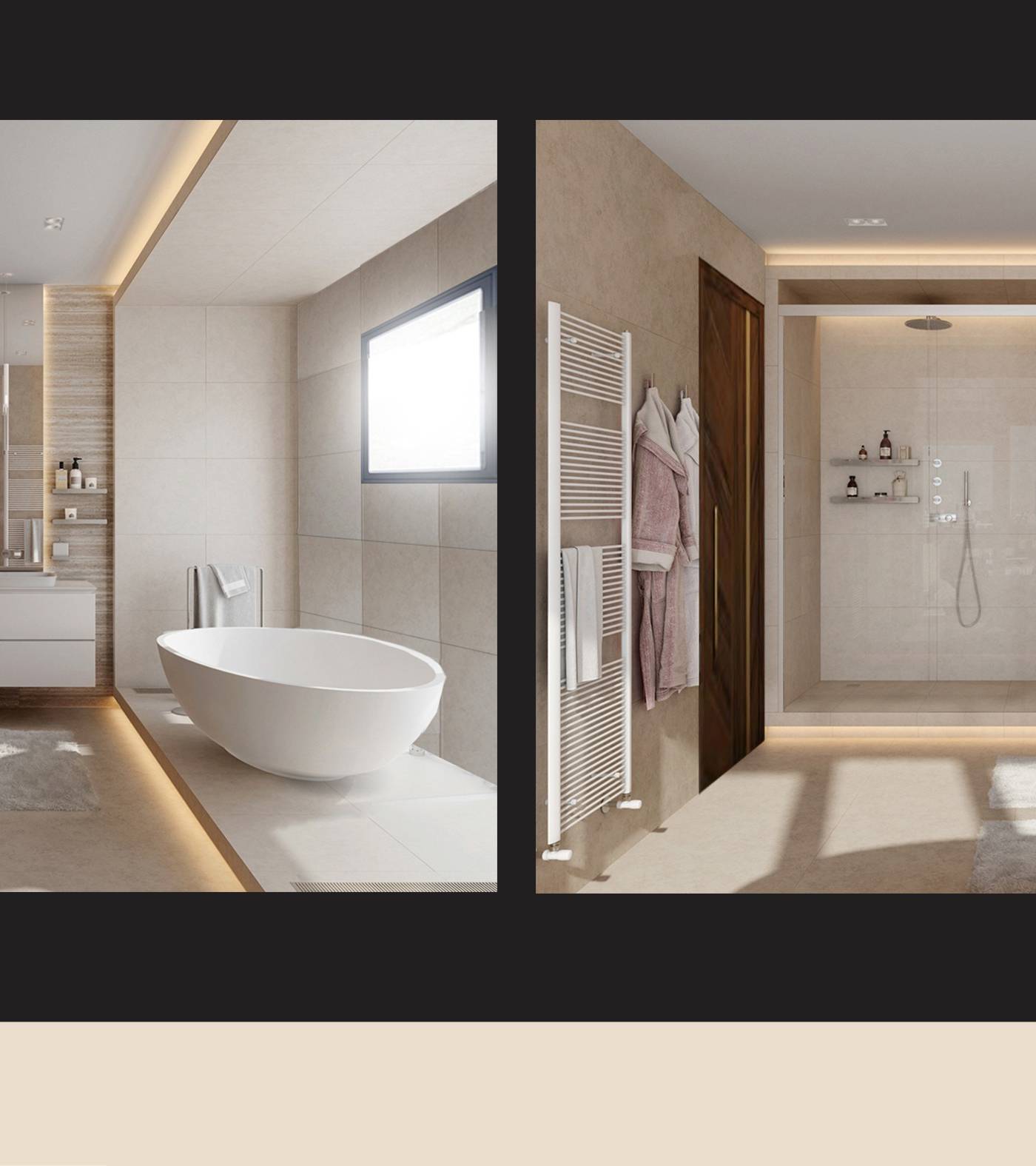
3D design concept for a master bathroom, issued as part of a drawing set for approval.
Mainland, free zone, landlord tower
Three paths, and tenants usually plan for the wrong one.
On mainland, the tenant or the tenant's contractor submits to DET and Civil Defence, pays the fees, holds the permit and calls the inspections. The building owner issues a no-objection certificate and reviews the drawings for structural and MEP impact.
In a free zone, the free-zone authority replaces the municipality part of the process. Some issue permits directly. Some require a consultant from their approved list. Some run a single-window review that includes civil defence. A DET permit from your last office does not carry over.
The third path catches people: a landlord-controlled tower, or a mall. The landlord has a fit out guide, an approved contractor list, working-hour rules, insurance requirements and a deposit. Nothing reaches DET until their reviewer has stamped the drawings. Two review cycles stacked means the programme must carry the landlord's timeline as well as the authority's.
The submittal pack
An office fitout approval and a restaurant approval share a core pack. Layout and reflected ceiling plans. MEP single-line diagrams and load schedules. Material and finish specifications with fire certificates attached. A door schedule listing the rating of every door. Signage details. Trade licence and insurance. The tenancy contract.
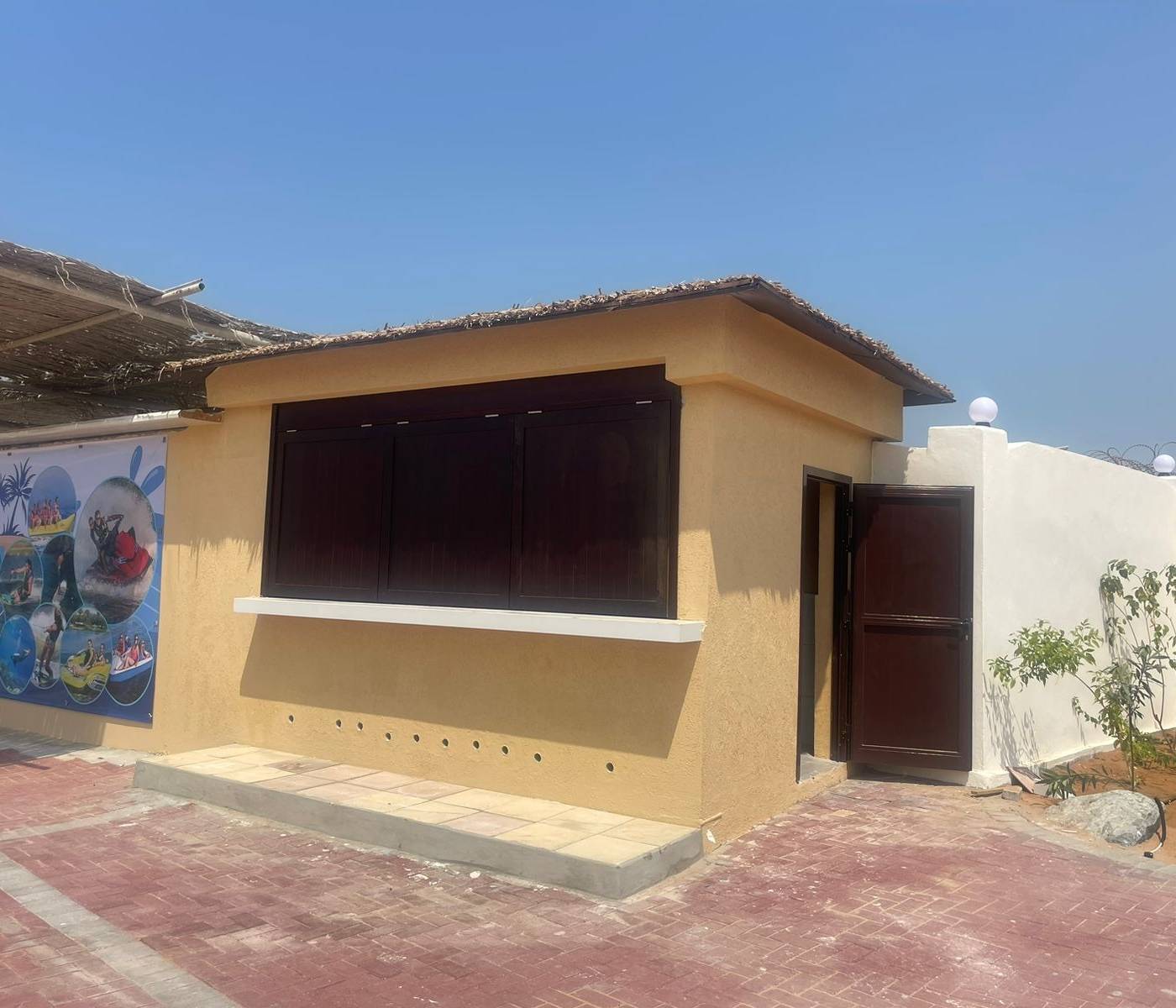
Finished commercial unit at handover, the stage that follows the completion certificate.
Revision discipline is where packages fail. If A-102 returns with comments and the resubmission carries A-102 rev B while the MEP sheet is still rev A, the whole set can be bounced. One transmittal, one revision register, one date.
How the sequence runs
Landlord NOC first. Nothing starts without it.
Then the authority submission, DET and Civil Defence in parallel where the free zone or landlord allows. Review runs about two to four weeks on a clean pack, longer with each return.
Then the permit to start. Only now is mobilisation legal. Demolition, ceiling strip-out or MEP capping done earlier is unauthorised work and turns a routine approval into a violation file.
Then inspections. Concealed works first, meaning ductwork, conduit and sprinkler pipework are checked before the ceiling closes. Fire-rated door installation next. Pre-handover inspection and the completion certificate last. That certificate is what your landlord wants before releasing the deposit, and what the next tenant's contractor will ask for.
Five reasons submittals bounce
An unrated door in an escape route. A standard timber door in a rated corridor is caught at Civil Defence every time. Settle ratings on the door schedule before the specification is written.
A ceiling void that blocks sprinklers. A bulkhead built to hide ductwork can leave heads below the required clearance. Draw the section, not only the plan.
Unapproved materials. A finish with no test certificate, or a certificate naming a different product, holds the entire package.
A trade licence that does not cover the scope. Mechanical works need the right licence category, and a joinery-only licence will not carry them.
A revision that is unstamped or out of step with the transmittal. Reviewers compare. Make the comparison easy.
For the detail on drawing sets and joinery specifications, the fit-out and joinery guides from Shukran Interiors cover them.
What to confirm in writing before you mobilise
Get the landlord's approval letter with its conditions written out. Confirm who holds the permit, your contractor or the landlord's, because that decides who answers the inspector on site. Confirm working hours, deposit terms, inspection notice periods, and that the approved revision on site is the one sitting in the authority's system.
"Works closely with client according to demands. Understand the latest market trends. Puts clients first." Sadiq Hazrat, 5/5
Shukran Interiors sits at 4.8 stars from 31 Google reviews, and the building type changes the weight of the approval. A mosque prayer hall brings occupancy, ablution drainage and exit capacity into the Civil Defence review. A clinic adds medical gas, privacy and washable surfaces. To price your approval and fit-out, send the floor plan with dimensions, photos of the unit including the ceiling and electrical room, the building name and the floor. WhatsApp 055 131 7286 is the fastest route, or talk to our fit-out team.
Frequently asked questions
Who approves a fit-out in a free zone?
The free-zone authority does, not DET. DMCC, JAFZA, TECOM and similar bodies run their own review and often fold civil defence into it. Some require a consultant from their approved list, so confirm that before you appoint anyone.
Can work start before approval?
No. Mobilising before the permit to start is unauthorised work, and it can be logged as a violation that delays the approval you were waiting for. Strip-out, ceiling removal and MEP capping all count as work.
Does a small office refresh need a permit?
Sometimes not. Paint, carpet and loose furniture normally need nothing. Move a wall, drop a ceiling, add a meeting room or alter electrical points and you are into a permit, usually with Civil Defence review if the ceiling void or the escape route changes.
How long does fit out approval take in Dubai?
Allow two to four weeks for authority review on a clean submission, on top of the landlord NOC. Each returned submittal adds a cycle. Landlord-controlled buildings take longest because two reviews run in sequence.
Who holds the fit out permit, the landlord's contractor or the tenant's?
Whoever is named on the application. If the tenant appoints the contractor, the tenant's contractor holds it, calls inspections and closes it out. Some towers insist the permit sits with the landlord's contractor, and the tenant's team then works under that.