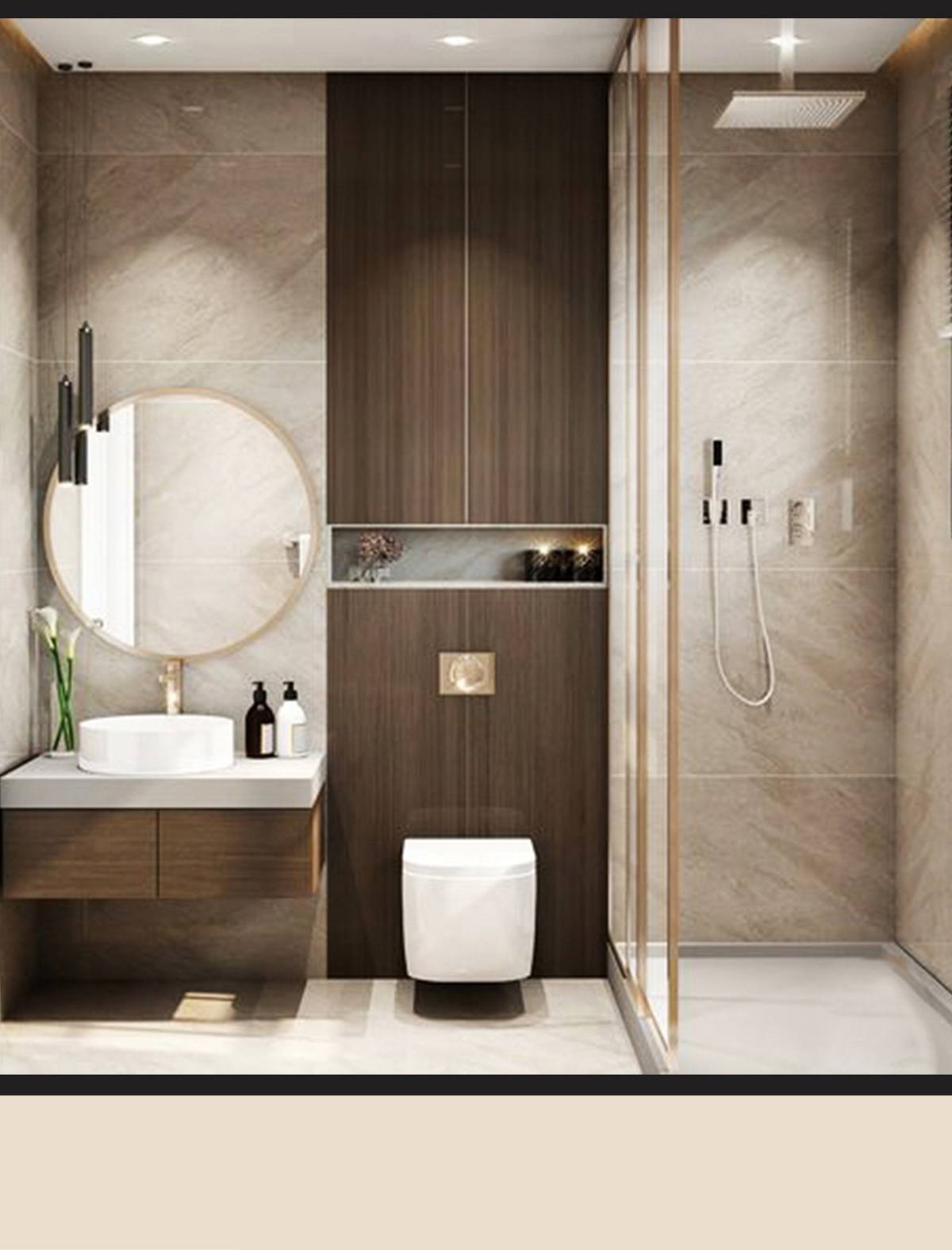
Joinery maintenance contract Dubai: what it covers
A commercial joinery maintenance contract in Dubai is a scheduled inspection and repair service for joinery that is already installed and out of its defects liability period. It fixes doors, counters, panelling, cabinets and hardware on a defined frequency and a defined response time. It is not a warranty, and the contracts that fail are the ones that blur the two.
What sits inside the scope, and what does not
Every item should be listed, counted and located. In practice the scope covers door sets and frames, reception counters, wall panelling and media walls, cabinetry and carcasses, ironmongery and soft-close hardware, and the timber and veneer finishes on all of it. Ironmongery is where the contract earns its money: closers, floor springs, hinges, locks and runners take more punishment than the timber does.
Normally excluded: the substrate and structure behind the joinery, MEP, ceilings and partitions, glass breakage, malicious damage, and anything tracing back to a design or installation fault in the original fit-out. Those belong in defects liability, not maintenance. Write the exclusions down. A contractor who will not put exclusions in writing is pricing an open-ended liability and will recover it through slow response.
Defects liability and paid maintenance are not the same contract
The defects liability period covers the original work. A door that drops because the frame was not packed correctly, a veneer that lifts because the adhesive was wrong, edge-banding that fails in the first summer: those are defects and the fit-out contractor carries them. Paid maintenance starts when that period ends and covers wear, use, humidity movement and accidental damage.
The boundary gets missed in two ways. A contract states a response time but never defines what counts as a defect, so every call becomes a negotiation. Or a tenant signs a maintenance contract during the defects period and pays twice for the same repair. Fix both with one clause: the contractor attends, inspects and classifies the fault in writing inside the response window, and the classification decides who pays.
"I had the pleasure of working with this company on the pit-out work at my hotel, and I am extremely satisfied with the results." Imdadullah Khan, 5/5
Hospitality joinery is where classification matters most, because a guest bathroom vanity or a corridor door set cannot wait for a debate.
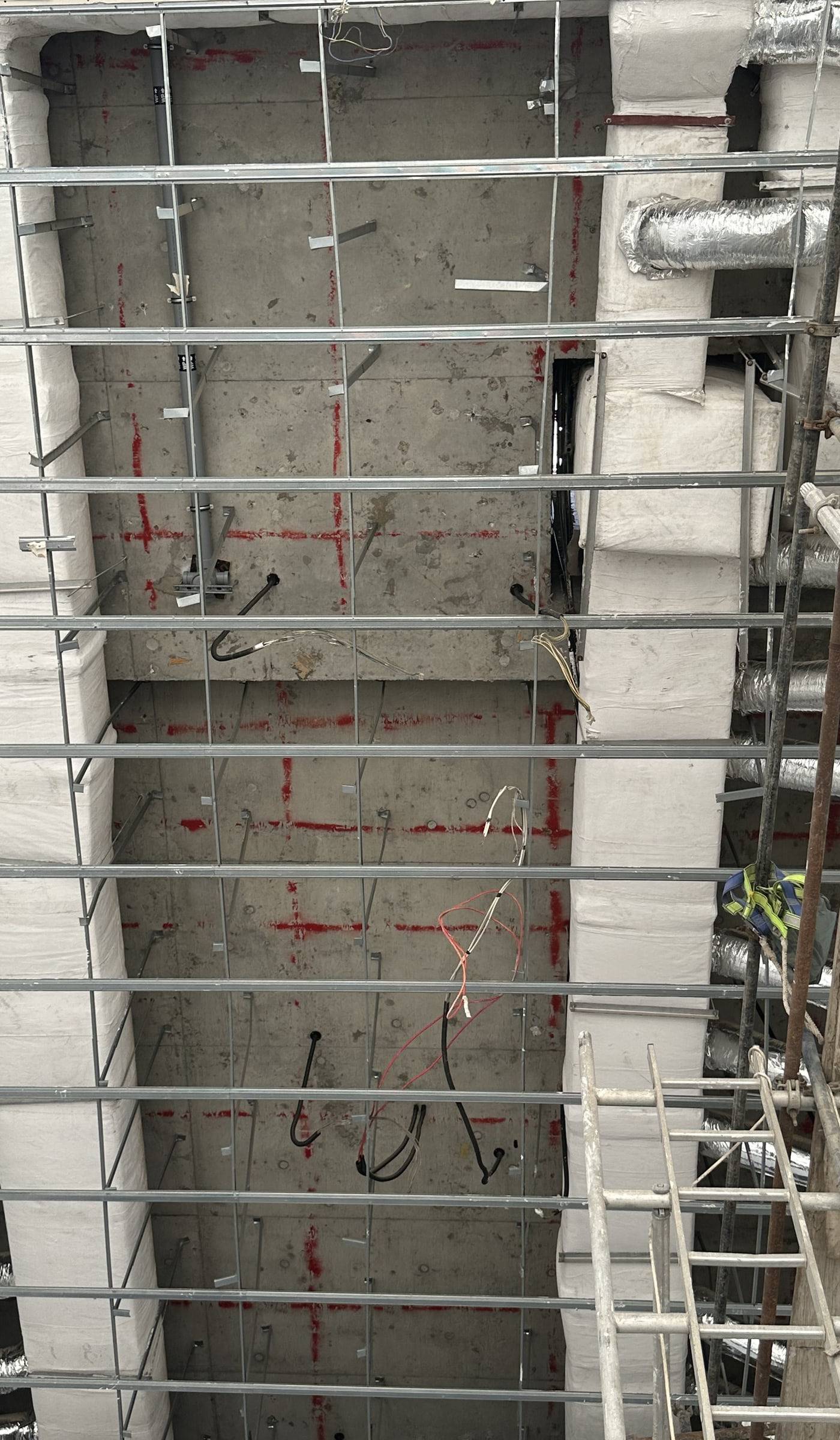
Ceiling services above a live fit-out. When ducts or return air are wrong, the joinery below dries unevenly and failures cluster in one zone.
Why joinery moves in Dubai
Air conditioning runs hard for eight months and pulls moisture out of timber and veneer. Then summer humidity swings back and the same panels take moisture in. Veneer lifts at the edges first, edge-banding shrinks and shows a dark line, doors drop on their hinges as frames move, and sprayed finishes craze at the joints. In high-footfall retail and F&B the hardware gives out before the timber does.
Ceiling services matter here. Where ducts above a tenancy are badly insulated or return air short-circuits, the joinery below dries unevenly and the same door keeps failing. A contractor who only looks at the door will keep coming back to it.
Fire-rated door sets are a separate obligation. Dubai Civil Defence inspection looks at the assembly, not just the leaf: gaps, intumescent strips, seals, closers, signage. A door set that has dropped out of alignment fails, and a failed inspection is a building compliance problem, not a joinery problem. Keep door assemblies on a shorter cycle than the rest of the scope.
Response times and SLA wording you can copy
Split the schedule into two tiers. Emergency covers a door that will not secure, a lockout, a counter or banquette that has failed in a live F&B unit, anything creating a safety or security risk. Write it as: the contractor acknowledges within X hours and attends within Y hours of the call, with a temporary make-safe where a permanent repair needs parts.
Scheduled covers programmed visits at agreed intervals, with a fix register issued after each one. Write it as: the contractor attends the agreed number of scheduled visits per year, inspects every item in Schedule A, and issues a photo fix register within a stated number of working days.
Add the escalation: named contact, what happens if the response window is missed, and who authorises a repair above a set value. Mall and landlord fit-out rules usually settle the third. Most Dubai malls require an approved contractor, a work permit, security clearance for technicians and out-of-hours access for anything noisy. Judge a bid on whether the contractor can operate inside those rules without a week of paperwork per visit.
The handover file that makes repairs invisible
A repair should not be visible. That depends on what was recorded at handover, and most maintenance contracts start with nothing.
Ask for a fix register with photographs before and after. Ask for an asset list per unit: every door set numbered by location, its ironmongery brand and model, its finish and sheen level. Ask for spare veneer from the original batch, spare edge-banding, and hardware references still in production. Then the matching-profile notes: how the profile was cut, what the spray match was, which batch the veneer came from. Our interior fit-out and joinery guides go deeper on finish schedules if you are rebuilding that file from scratch.
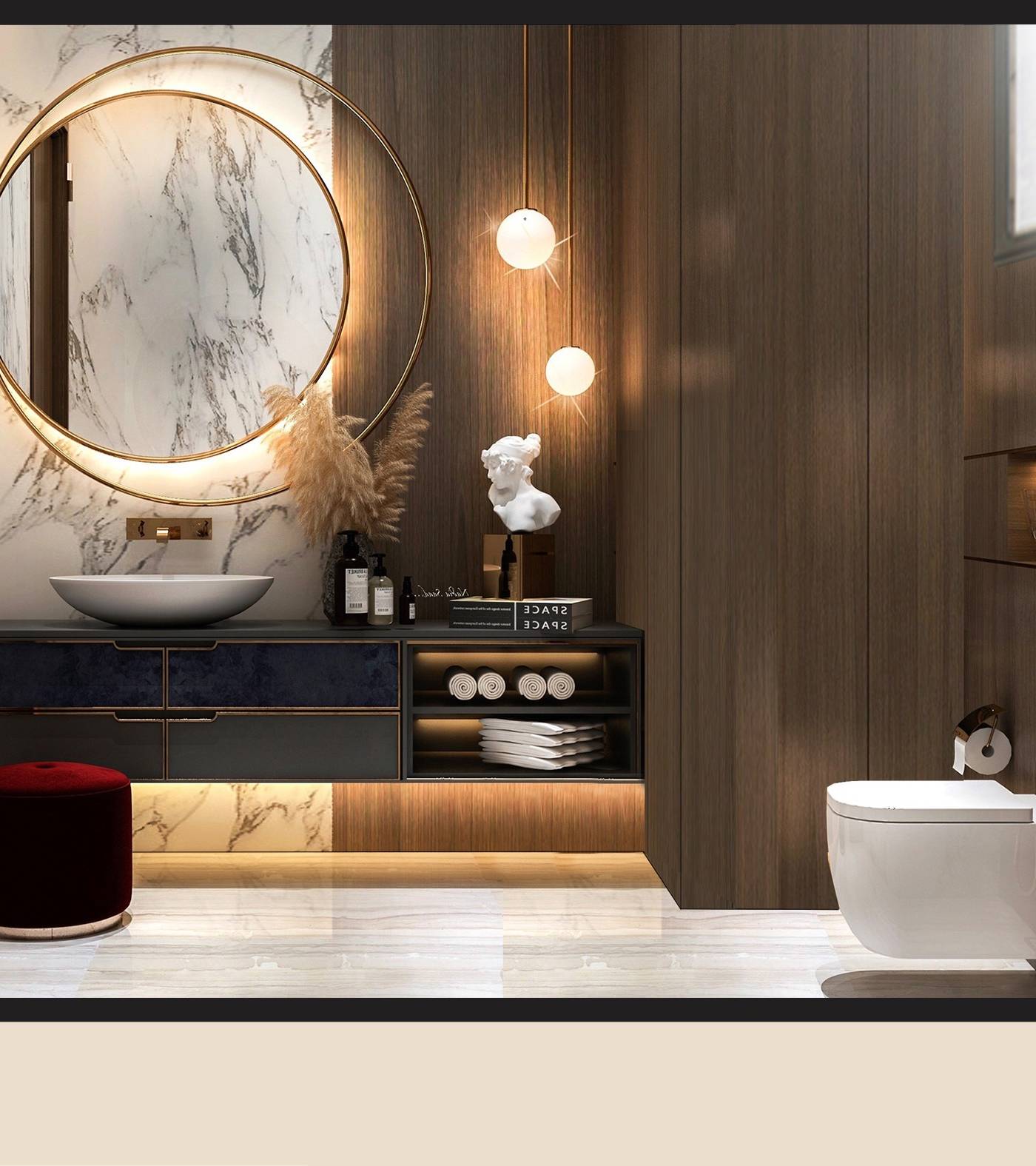
3D design render, not built work. Veneer and sprayed finish records from handover are what let a later repair blend into a run like this.
Without that file, a veneer repair two years later becomes a patch you can see from the reception desk. With it, the repair is a short conversation.
Writing the scope before you tender
Do the counting first. Door sets, counters, panel runs, cabinet units, and the finish types on each.
- Group items by unit and room, not by trade.
- State the finish for each group so bidders price the right repair method.
- Set visit frequency and response windows per tier.
- Attach the handover file, or state plainly that none exists.
- Require the fix register and asset list as deliverables, not extras.
Rates depend on unit count, finish type and access, so three bidders given the same schedule price comparably and per-square-metre figures tell you nothing. Shukran Interiors runs its own commercial joinery and interior fit-out workshop in Dubai, which is why it can match a profile rather than replace a whole run.
To get a real number, send the unit list with counts, photos of each fault, the finish schedule and the building name. WhatsApp +971 55 131 7286 is the fastest way to request a joinery maintenance site assessment; the landline is 04 254 0442. You get a written scope before anything is priced.